
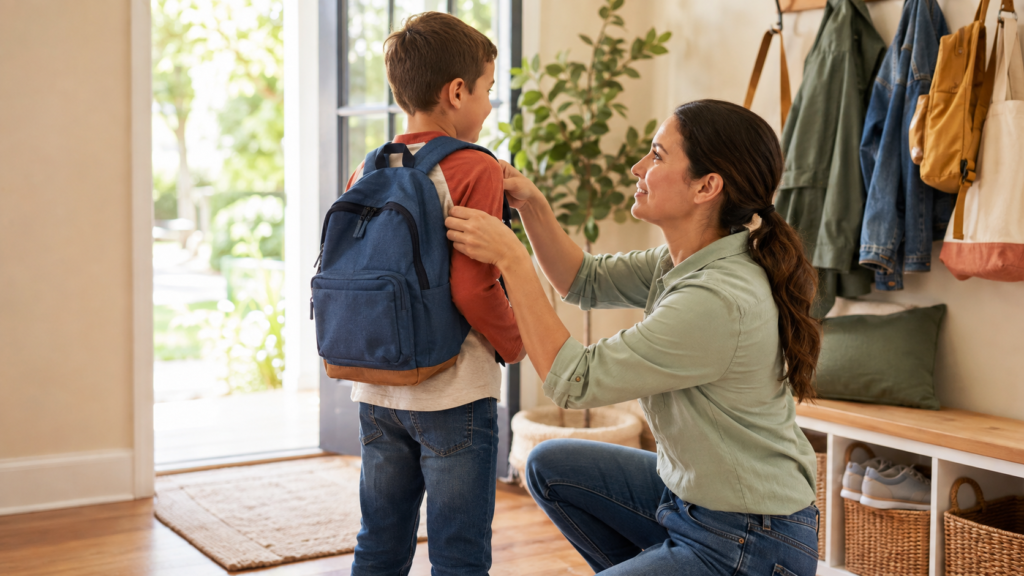
A backpack can hold a whole school day: books, technology, lunch, art projects, and the mysterious collection of papers that gathers at the bottom. When the bag becomes too heavy or does not fit well, a child may arrive at school already uncomfortable or tired.
The good news is that families do not need a perfect backpack or a complicated system. A few quick checks can make carrying school supplies feel more comfortable and manageable. Occupational therapy brings a practical lens to the task: look at the child, the backpack, the route, and the routine—and adjust what can be changed.
Start With Fit, Not Features
A backpack should match the child’s size rather than leaving lots of extra room to fill. Look for two broad, adjustable shoulder straps, a padded back, and compartments that help distribute the load. A chest or waist strap can help keep the bag close to the body when it is adjusted comfortably.
With both shoulder straps on, the backpack should sit close to the child’s back. The American Academy of Pediatrics advises that the bottom rest around the curve of the lower back rather than hanging far below the waist. A bag that swings, pulls backward, or makes a child lean forward deserves another look.
Pack Heavy Items Close
Where an item sits changes how the load feels. Place heavier books, binders, or a laptop closest to the child’s back. Use compartments to keep supplies from shifting, and balance smaller items from side to side. Check that pencils, rulers, or other hard edges are not pressing through the back panel.
A simple weekly cleanout is one of the most useful habits. Remove old papers, finished library books, extra water bottles, and supplies that are not needed. If a child must carry a heavy load, ask the school whether digital materials, a locker, or a second set of books is available. A rolling backpack may help in some settings, but school rules, stairs, and crowded hallways matter.
Use Both Straps—and Practice the Routine
Wearing one strap may feel faster, but it shifts the load to one side. Encourage children to use both straps and adjust them evenly. The backpack should be snug enough to stay close without restricting movement or making the straps dig in.
The routine matters too. Place the backpack on a stable chair or bench while loading it. When lifting from the floor, the child can face the bag, bend at the knees, use both hands, and avoid twisting. Practice at an unhurried time so the sequence becomes familiar before a busy morning.
Watch the Child, Not Just the Scale
AAP family guidance recommends keeping backpacks light and provides weight ranges as a general reference. A number alone does not tell the whole story. Pay attention if a child struggles to put the bag on, leans forward, reports tingling or numbness, develops red strap marks, or has repeated neck, shoulder, or back pain.
Ask when the discomfort happens and what the child is carrying that day. The answer may point to a quick solution, such as shortening the straps, moving a laptop closer to the back, or leaving an unnecessary binder at home. Children grow quickly, so recheck the fit during the year rather than only on the first day of school.
Make the System Easier to Follow
A child is more likely to use a healthy setup when it is simple and predictable. Try a short visual checklist near the door: water, lunch, folder, device, and only the books needed that day. Give frequently used items the same pocket every time. For younger children or anyone who finds organization difficult, colored pouches or picture labels may reduce searching and overpacking.
These strategies support more than comfort. They can make the morning less rushed, help a child find materials at school, and build independence with a daily responsibility. Choose one change at a time, involve the child in deciding what works, and adjust the system based on real school days.
When Extra Support May Help
Do not ignore persistent pain or symptoms that occur even when the backpack is not being worn. A pediatrician or other qualified healthcare professional can evaluate pain, weakness, numbness, injury, or changes in movement. After surgery or an injury, ask the child’s clinician before returning to backpack use.
An occupational therapist can look at the full school-day task: fit, lifting, organization, motor skills, sensory preferences, endurance, and the demands of the school environment. Recommendations should be individualized, especially for children with disabilities, pain, medical conditions, or mobility needs.
A Lighter Start to the School Day
Backpack comfort is not about blaming a child for carrying the wrong way. It is about making the environment and routine fit the person using them. A right-sized bag, a balanced load, two straps, and a weekly cleanout are small steps that can support comfort and confidence.
Restorative Solutions helps families explore practical strategies for the daily activities that matter. If school routines, organization, comfort, or participation are becoming difficult, contact Restorative Solutions to learn whether individualized occupational therapy may be a helpful next step.
Sources
• American Academy of Pediatrics, HealthyChildren.org. “Back-to-School Tips for Families.” Updated August 2026. https://www.healthychildren.org/English/ages-stages/gradeschool/school/Pages/back-to-school-tips.aspx (accessed September 7, 2026).
• American Academy of Pediatrics, HealthyChildren.org. “Backpack Safety.” Updated August 15, 2023. https://www.healthychildren.org/English/safety-prevention/at-play/Pages/Backpack-Safety.aspx (accessed September 7, 2026).
• American Occupational Therapy Association. “International Backpack Awareness Day Focuses on Proper Usage.” https://www.aota.org/about/for-the-media/international-backpack-awareness-day-focuses-on-proper-usage (accessed September 7, 2026).