
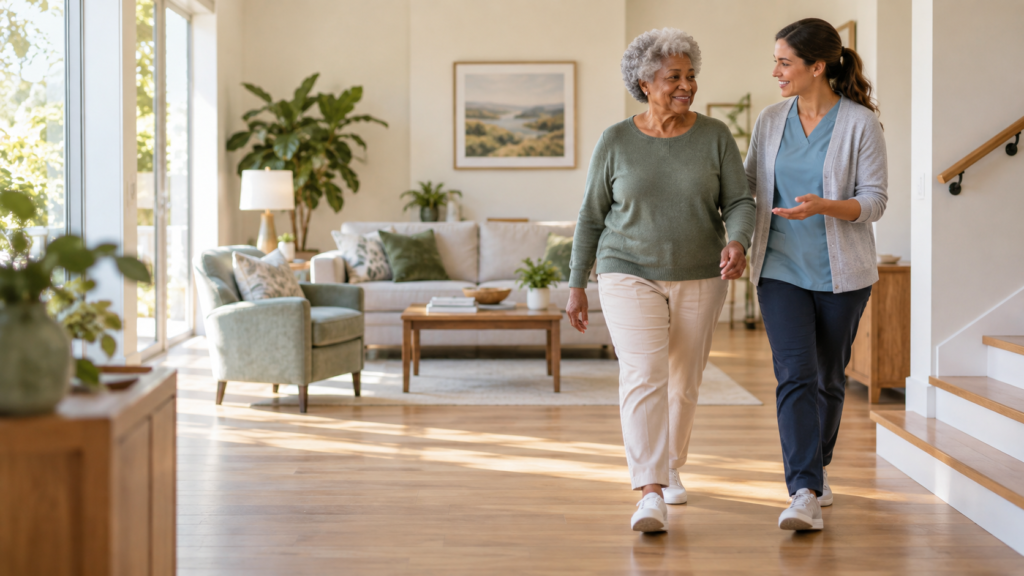
Home should be a place where daily routines feel familiar and manageable. Yet a dim hallway, a slippery bathroom floor, or an item stored just out of reach can make ordinary tasks feel less steady. The goal of fall prevention is not to make life smaller. It is to remove avoidable barriers so you can keep moving, participating, and doing what matters to you with greater confidence.
Falls are common, but they are not an inevitable part of aging. The Centers for Disease Control and Prevention reports that more than one in four adults age 65 and older falls each year. Risk is usually shaped by several factors working together—including the environment, vision, medications, strength, balance, footwear, fatigue, and how a task is performed. That means prevention can also be practical and personal.
Start with the routines you actually do
A generic safety checklist can be useful, but your best starting point is a routine that feels rushed, awkward, or uncertain. Think about getting to the bathroom at night, stepping into the shower, carrying laundry, preparing a meal, bringing groceries inside, or standing up from a favorite chair. Where do you pause, reach, hurry, or hold onto furniture? Those moments offer clues about what could be adjusted.
Occupational therapy looks at the fit among the person, the activity, and the environment. An occupational therapy practitioner may watch how you complete a meaningful task, learn what matters to you, and help identify changes that support safety without taking away independence.
Five small changes worth checking this week
- Clear the path. Move cords, shoes, baskets, pet items, and low furniture away from the routes you use most. Secure carpeting and remove or firmly secure small rugs that slide or bunch.
- Improve lighting. Add bright, even light near stairs, entries, and hallways. Night-lights or motion-activated lights can make the route from bed to bathroom easier to see.
- Bring essentials within easy reach. Store frequently used kitchen, bathroom, and closet items between about waist and shoulder height when possible. Avoid climbing on chairs to reach high shelves.
- Add support where it is needed. Secure handrails and properly installed grab bars can provide dependable support. Towel racks and furniture are not designed to substitute for safety equipment.
- Make wet areas less slippery. Use nonskid surfaces in the tub or shower and address spills promptly. Choose supportive, well-fitting footwear with nonslip soles for moving around the home.
Look beyond the floor
A safer home is only one part of the picture. Tell a healthcare professional if you have fallen, feel unsteady, or have started avoiding activities because you are worried about falling. A medication review may identify side effects such as dizziness or drowsiness. Regular vision and hearing checks can uncover changes that affect how you move through a space. A qualified professional can also recommend an appropriate strength and balance plan and make sure a cane or walker is the correct type and height for you.
Do not make sudden changes to medication or begin a challenging exercise program on your own. New dizziness, fainting, sudden weakness, or a fall with a possible head injury deserves prompt medical attention.
Confidence matters, too
After a near-fall or fall, it is understandable to feel cautious. But avoiding movement altogether can lead to less activity and fewer opportunities to maintain strength and confidence. A better approach is to make the task and environment feel more manageable, then practice safely at an appropriate level. This may mean changing where an item is stored, using a seated option for part of a task, pacing an activity, or learning a safer movement strategy.
How occupational therapy can help
Home changes are most useful when they match the person who lives there. An occupational therapy assessment may consider daily routines, mobility, vision, sensation, cognition, fatigue, caregiving needs, and the physical setup of the home. Recommendations can range from simple organization changes and adaptive equipment to task practice and coordination with other healthcare or home-modification professionals.
The result is not a one-size-fits-all list. It is a practical plan centered on the activities you want and need to do.
Take one next step
Choose one routine today and walk through it slowly. Notice the lighting, the path, what you carry, where you reach, and what you use for support. One thoughtful change can make that routine feel easier—and several small changes can add up to a home that supports comfort, participation, and independence.
If you or someone you care for feels unsteady at home, Restorative Solutions can help you explore practical strategies tailored to everyday life. Contact our team to learn whether an occupational therapy evaluation may be appropriate. This article is educational and is not a substitute for individualized medical advice.
Sources
- Centers for Disease Control and Prevention. Facts About Falls (updated January 27, 2026). https://www.cdc.gov/falls/data-research/facts-stats/
- CDC. STEADI—Older Adult Fall Prevention (resources updated through 2025). https://www.cdc.gov/steadi/
- National Institute on Aging. Preventing Falls at Home: Room by Room. https://www.nia.nih.gov/health/falls-and-falls-prevention/preventing-falls-home-room-room
- National Institute on Aging. Home Safety Tips for Older Adults (updated June 5, 2025). https://www.nia.nih.gov/health/aging-place/home-safety-tips-older-adults
- American Occupational Therapy Association. Home Modifications & Key Community Partnerships. https://www.aota.org/practice/practice-settings/home-modifications-key-community-partnerships/