
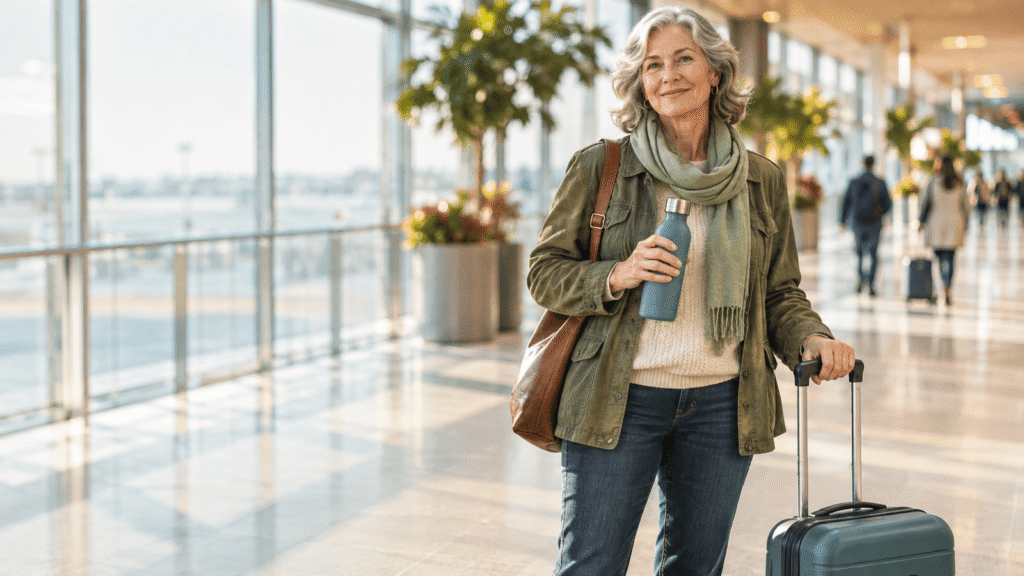
Holiday travel can bring long drives, airport lines, unfamiliar bathrooms, and a schedule that is not entirely your own. If urinary urgency, frequency, or leakage is already on your mind, those details can make a joyful trip feel harder than it needs to be. A little planning can reduce uncertainty without letting bladder concerns run the whole day.
These practical ideas are not a diagnosis or a one-size-fits-all treatment plan. They are a starting point for traveling with more comfort and confidence—and for noticing when personalized support could help.
Make a simple bathroom plan before you leave
Planning does not mean mapping every minute. It means removing a few predictable stressors. Before a road trip, look for rest areas or reliable stops along the route. At an airport, locate a restroom after security and near your gate. If standing in a long line is difficult, ask the airline, venue, or travel provider about accessibility options before travel day.
Choose clothing that is comfortable and quick to manage. Keep any supplies you already use—such as a change of underwear or an absorbent product—in your personal bag instead of checked luggage. These are practical backups, not signs that you have failed.
Hydrate steadily instead of “saving” all your fluids
It is tempting to drink very little before a trip. However, drinking too little can make urine more concentrated, which may bother the bladder for some people. Drinking a large amount all at once can also create a sudden need to go. A steadier pattern is often easier to manage: sip water across the day and follow the fluid guidance your healthcare professional has given you.
Fluid needs vary with health conditions, medications, activity, and climate. People with heart failure, kidney disease, or other fluid restrictions should follow their own medical plan rather than general hydration advice.
Notice your personal triggers—without creating a long “forbidden” list
Caffeine, alcohol, carbonated drinks, citrus, spicy foods, and some other foods or beverages may worsen urgency for some people, but not everyone reacts the same way. Travel day is a useful time to choose familiar foods and notice patterns you already recognize. You do not need to remove everything “just in case.”
If symptoms are hard to predict, a brief bladder diary can help. Record when and what you drink, bathroom trips, strong urges, and leakage for a few typical days. A clinician can use that information to help identify patterns and tailor recommendations.
Use bathroom habits that support emptying
When a safe bathroom is available and you genuinely need to go, give yourself enough time. Sit fully on the seat when possible, let your belly and pelvic floor soften, and avoid hovering, pushing, or rushing. NIDDK notes that hovering can make it harder for the muscles around the bladder to relax completely.
Frequent “just in case” trips are not automatically helpful for everyone. Going very often at the slightest sensation can sometimes reinforce a pattern of frequent emptying, while holding for an uncomfortably long time is not a good goal either. If you are unsure what timing is appropriate, ask a pelvic health professional for an individualized plan.
When urgency rises, pause before you rush
A sudden urge can trigger a fast walk to the bathroom—and rushing can make the moment feel even more urgent. APTA Pelvic Health suggests stopping your activity, staying calm, and taking slow breaths rather than immediately racing to the toilet. Once the first wave settles, walk to the bathroom at a comfortable pace.
Pelvic floor strategies are not identical for every person. Some people need strengthening; others need help relaxing or coordinating the muscles. A pelvic floor therapist can assess what is happening and teach an urge-management approach that fits your body.
Keep bowel comfort and movement in the travel plan
Constipation can make bladder symptoms harder to manage. Travel can change meal timing, activity, and bathroom routines, so pack familiar fiber-containing snacks, drink the amount of fluid that is right for you, and include movement breaks when you can. On a long drive or flight, changing position and walking when safe can also make the trip feel less stiff and tiring.
Try to respond to bowel urges and allow unhurried bathroom time. If constipation is frequent, painful, or new, discuss it with a healthcare professional rather than repeatedly adding supplements on your own.
Know when to ask for help
Urinary urgency and leakage are common, but you do not have to simply work around them forever. Seek medical care for a sudden or significant change, pain or burning with urination, fever, blood in the urine, trouble starting or emptying, or an inability to urinate. These symptoms need proper evaluation.
For ongoing urgency, frequency, leakage, or travel anxiety related to bathroom access, occupational therapy and pelvic floor therapy may help with routines, environmental planning, bladder habits, muscle coordination, and confidence in daily activities.
Travel can feel more manageable
A supportive plan is usually simple: know your options, hydrate in a way that fits your health needs, use relaxed bathroom habits, and bring practical backups. Restorative Solutions can help you look at the whole picture—your symptoms, routines, environment, and the activities you want to keep doing. Contact our team to learn whether occupational therapy or pelvic floor therapy may be appropriate for you.
References
- National Institute of Diabetes and Digestive and Kidney Diseases (NIDDK). “Prevention of Bladder Control Problems (Urinary Incontinence) & Bladder Health.” Last reviewed July 2021.
https://www.niddk.nih.gov/health-information/urologic-diseases/bladder-control-problems/prevention - NIDDK. “Treatments for Bladder Control Problems (Urinary Incontinence).”
https://www.niddk.nih.gov/health-information/urologic-diseases/bladder-control-problems/treatment - Mayo Clinic. “Bladder control: Lifestyle strategies ease problems.” May 10, 2025.
https://www.mayoclinic.org/diseases-conditions/urinary-incontinence/in-depth/bladder-control-problem/art-20046597 - Academy of Pelvic Health Physical Therapy (APTA Pelvic Health). “Tips for Improving Urge Urinary Incontinence.” March 1, 2023.
https://www.aptapelvichealth.org/info/tips-for-improving-urge-urinary-incontinence