
Bowel movements are a basic part of daily life, yet they can become a source of stress when stools are hard to pass, you need to strain, or you still feel unfinished afterward. These experiences are common, but that does not mean you have to ignore them or push harder.
Small changes in timing, position, and routine may make bathroom visits more comfortable. They can also give you useful information about when to seek individualized help. The goal is not a perfect schedule—it is a calmer, more supportive routine that works with your body.
Why Straining Is Not the Only Strategy
A bowel movement requires coordination. The abdominal wall helps create gentle pressure while the pelvic floor and anal muscles need to lengthen and relax enough for stool to pass. When those muscles tighten instead of relaxing, repeated pushing may not solve the problem and can leave you feeling stuck.
Constipation can have many causes, including changes in food or fluid intake, medications, reduced activity, pregnancy, aging, travel, and health conditions. Pelvic floor coordination can be one part of the picture. This is why a one-size-fits-all instruction—such as simply doing more Kegels—is not appropriate for everyone.
Set Up a More Supportive Position
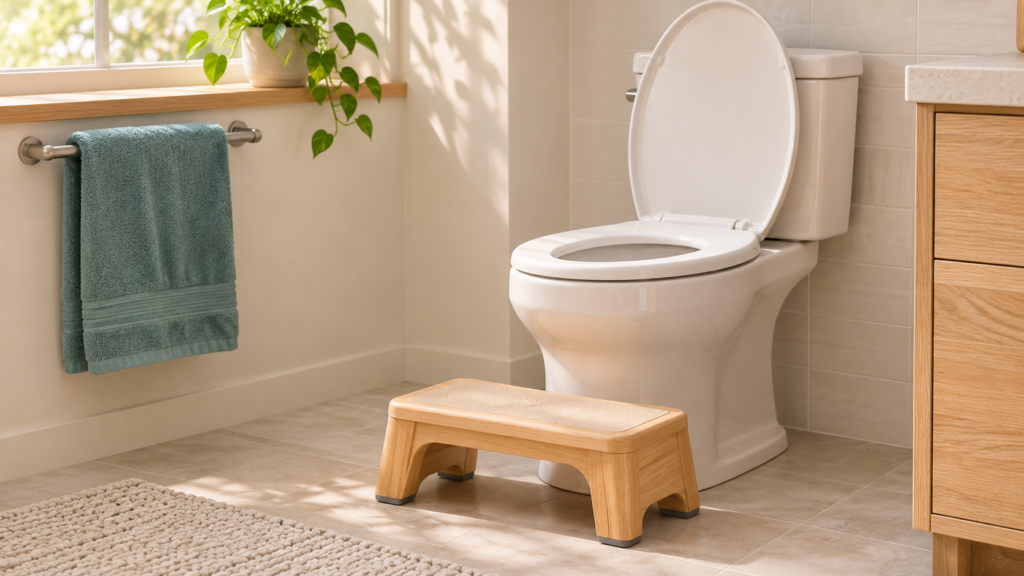
Begin with a stable, comfortable setup. Sit fully on the toilet rather than hovering. Place your feet on the floor or on a secure footstool so your knees are slightly higher than your hips. Lean forward a little, rest your forearms on your thighs, and keep your belly and jaw relaxed.
Breathe steadily instead of holding your breath. A slow exhale can help reduce unnecessary bracing. Give yourself time, but avoid turning the toilet into a long sitting session. If nothing is happening, step away and try again when you have a natural urge rather than repeatedly forcing it.
Use Timing and Urges to Your Advantage
Try to respond when you notice the urge to have a bowel movement. Repeatedly delaying can make stool harder to pass for some people. A regular opportunity may also help: the National Institute of Diabetes and Digestive and Kidney Diseases notes that trying 15 to 45 minutes after breakfast can be useful because eating helps the colon move stool.
Build enough privacy and time into the routine when possible. Rushing, guarding, and worrying about interruption can make relaxation harder. For children or adults who benefit from structure, a simple visual routine can help: feet supported, breathe, allow time, finish, and wash hands.
Support Stool Consistency Gently
Fiber, fluids, and regular movement can support bowel health. NIDDK advises that adults generally need about 22 to 34 grams of fiber daily depending on age and sex. Fruits, vegetables, beans, whole grains, nuts, and seeds can contribute. Increase fiber gradually, and drink adequate liquids as advised for your health needs; adding a large amount quickly can increase gas or discomfort.
A short food, fluid, medication, and symptom log can reveal patterns without labeling foods as “good” or “bad.” Do not stop or change a prescription, supplement, or laxative on your own. A healthcare professional can help you decide what is appropriate, particularly if constipation is persistent or you have other medical conditions.
Notice When Coordination May Need Attention
Consider discussing pelvic floor assessment with a qualified healthcare professional if you regularly strain, feel blocked or incompletely emptied, need to change position repeatedly, or use your hand to help stool pass. Constipation, pelvic pain, urinary symptoms, or bowel leakage can sometimes occur alongside pelvic floor coordination difficulties.
Pelvic floor therapy is individualized. Depending on the evaluation, care may include education, breathing and relaxation strategies, toileting mechanics, movement, manual techniques, or biofeedback. Strengthening may help some people, while others first need to learn how to release overactive muscles.
Know the Signs That Need Medical Care
Seek medical advice when constipation does not improve with self-care or keeps returning. NIDDK recommends prompt medical attention for constipation with rectal bleeding or blood in the stool, constant abdominal pain, inability to pass gas, vomiting, fever, low back pain, or unintentional weight loss. New or significant changes in bowel habits also deserve a conversation with a healthcare professional.
These symptoms do not automatically mean something serious is present, but they should not be managed only with social-media tips or repeated straining.
Try One Change, Then Observe
This week, choose one low-pressure experiment: support your feet, respond to the urge, allow a calm post-breakfast opportunity, or add one fiber-rich food that fits your needs. Notice comfort, effort, and whether you feel finished. Small observations can make a healthcare conversation more useful.
Restorative Solutions provides individualized pelvic floor and occupational therapy support for everyday function. Contact our team to ask whether an evaluation may be a helpful next step for your bowel, bladder, comfort, or daily-routine goals.
References
- National Institute of Diabetes and Digestive and Kidney Diseases (NIDDK). “Treatment for Constipation.” Guidance on fiber and fluids, physical activity, bowel training, responding to urges, footstool use, medication review, and biofeedback. https://www.niddk.nih.gov/health-information/digestive-diseases/constipation/treatment (accessed November 8, 2026).
- National Institute of Diabetes and Digestive and Kidney Diseases (NIDDK). “Symptoms & Causes of Constipation.” Symptoms, common contributors, and warning signs requiring prompt medical attention. https://www.niddk.nih.gov/health-information/digestive-diseases/constipation/symptoms-causes (accessed November 8, 2026).
- American College of Obstetricians and Gynecologists (ACOG). “Pelvic Support Problems.” Discusses constipation and straining as contributors to pelvic support problems and the role of fiber and professional guidance. https://www.acog.org/womens-health/faqs/pelvic-support-problems (accessed November 8, 2026).
- Cleveland Clinic. “Pelvic Floor Dysfunction: What It Is, Symptoms & Treatment.” Medically reviewed January 12, 2024. Describes difficulty relaxing and coordinating pelvic floor muscles, symptoms, pelvic floor therapy, and biofeedback. https://my.clevelandclinic.org/health/diseases/14459-pelvic-floor-dysfunction (accessed November 8, 2026).
Educational note: This article provides general education and is not a diagnosis or a substitute for individualized medical or therapy care. Consult a qualified healthcare professional for personal symptoms, particularly symptoms that are new, persistent, severe, or changing.