
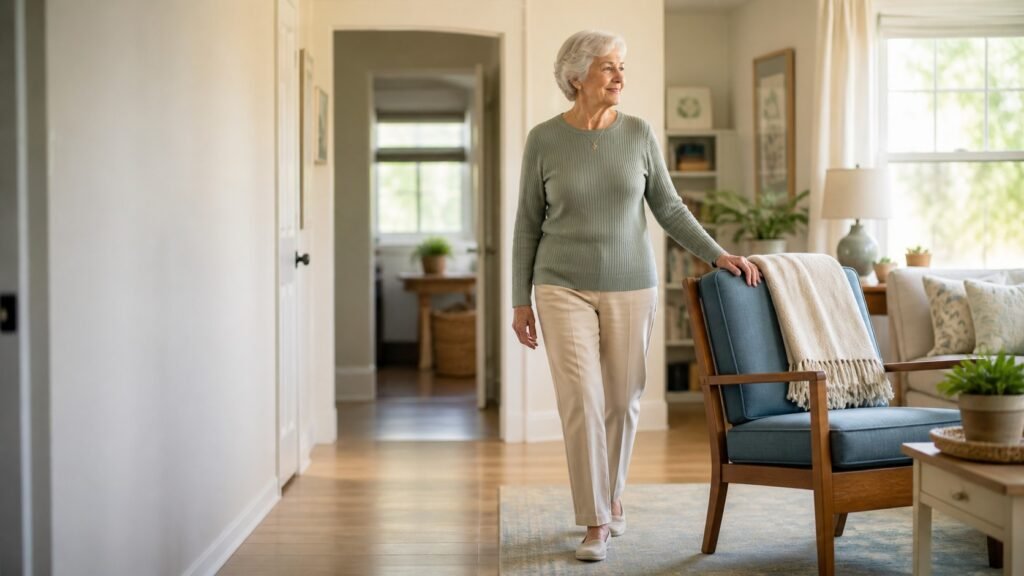
Feeling safe at home is not about removing every challenge or limiting the things you enjoy. It is about shaping your surroundings and routines so they support the way you want to live. A clear walkway, better lighting, the right footwear, or a well-placed handhold can make everyday movement feel more comfortable and confident.
Falls are common among adults age 65 and older, but they are not an inevitable part of aging. The National Institute on Aging notes that many falls can be prevented by combining home-safety changes with attention to movement, vision, medications, and overall health. The most useful plan is personal: it considers the individual, the activity, and the environment together.
Start With the Places You Use Every Day
Instead of trying to change the whole house at once, begin with one routine: getting out of bed, walking to the bathroom, preparing breakfast, or carrying laundry. Follow that route at the time you normally use it and notice what makes you slow down, reach, rush, or step around something.
Look for loose cords, curled rug edges, cluttered pathways, low furniture, pets underfoot, or items stored too high or too low. A home does not need to look clinical to be safer. Often, the best changes are quiet ones: move a basket, secure a rug, relocate a lamp, or keep frequently used items between waist and shoulder height.
Five Practical Changes That Can Make a Difference
- Clear the path. Keep commonly used walkways open and wide enough for easy turning. Remove loose clutter and route cords away from foot traffic.
- Improve the light. Add bright, even lighting to hallways, stairs, entrances, and the route to the bathroom. Night-lights can help with after-dark trips.
- Make transitions easier. Use secure handrails on stairs and consider professionally installed grab bars where extra support is needed. Avoid using towel racks or unstable furniture as handholds.
- Choose supportive footwear. Nonskid, low-heeled shoes that fit well offer more stability than socks, backless slippers, or smooth soles.
- Keep essentials within comfortable reach. Store everyday items where you can reach them without climbing, deep bending, or standing on a chair.
Safety Is More Than the House
A safer environment matters, but fall risk can also be affected by strength, balance, vision, hearing, foot discomfort, blood-pressure changes, and medication side effects. If you feel dizzy, unusually weak, unsteady, or rushed when moving to the bathroom, bring that information to a healthcare professional. A medication review with a physician or pharmacist and regular vision and hearing checks may uncover factors that can be addressed.
Staying active is also important. Avoiding movement because of fear can reduce strength and confidence over time. A qualified professional can help identify an appropriate balance and strengthening plan based on your health, goals, and current abilities.
How Occupational Therapy Can Help
Occupational therapy focuses on the activities that fill daily life. An occupational therapist can look at how you move through a real routine, what the task requires, and how the environment helps or gets in the way. That may include practicing safer ways to transfer, recommending equipment, adjusting the setup of a room, or finding strategies that preserve energy and independence.
The goal is not a generic checklist. It is a plan that fits the person and the life they want to keep living. A suggestion that works for one household may not be appropriate for another, especially when mobility, vision, cognition, pain, or caregiving needs differ.
When to Ask for Support
Talk with a qualified healthcare professional if you have fallen, nearly fallen, feel unsteady, worry about falling, or have changed your activities because you do not feel safe. The CDC’s STEADI approach encourages healthcare providers to screen for fall risk, assess modifiable factors, and intervene with appropriate strategies.
After a fall, seek urgent help for severe pain, a possible head injury, loss of consciousness, new confusion, weakness, or an inability to get up safely. Even if you feel fine, tell your healthcare professional about the fall; it may offer useful information about health, medication, vision, or mobility changes.
Confidence Grows From a Plan That Fits
Small changes can support safer movement without taking away independence. If you or someone you care for is feeling less confident at home, Restorative Solutions can help explore practical strategies for daily routines, mobility, and the home environment. Contact our team to learn whether an occupational therapy evaluation may be appropriate for your needs.
This article is for general education and is not a diagnosis or a substitute for individualized medical advice.
Sources
Centers for Disease Control and Prevention. About STEADI. Updated August 4, 2025. https://www.cdc.gov/steadi/about/index.html
National Institute on Aging. Falls and Fractures in Older Adults: Causes and Prevention. https://www.nia.nih.gov/health/falls-and-falls-prevention/falls-and-fractures-older-adults-causes-and-prevention
American Occupational Therapy Association. Productive Aging practice resources. https://www.aota.org/practice/clinical-topics/productive-aging