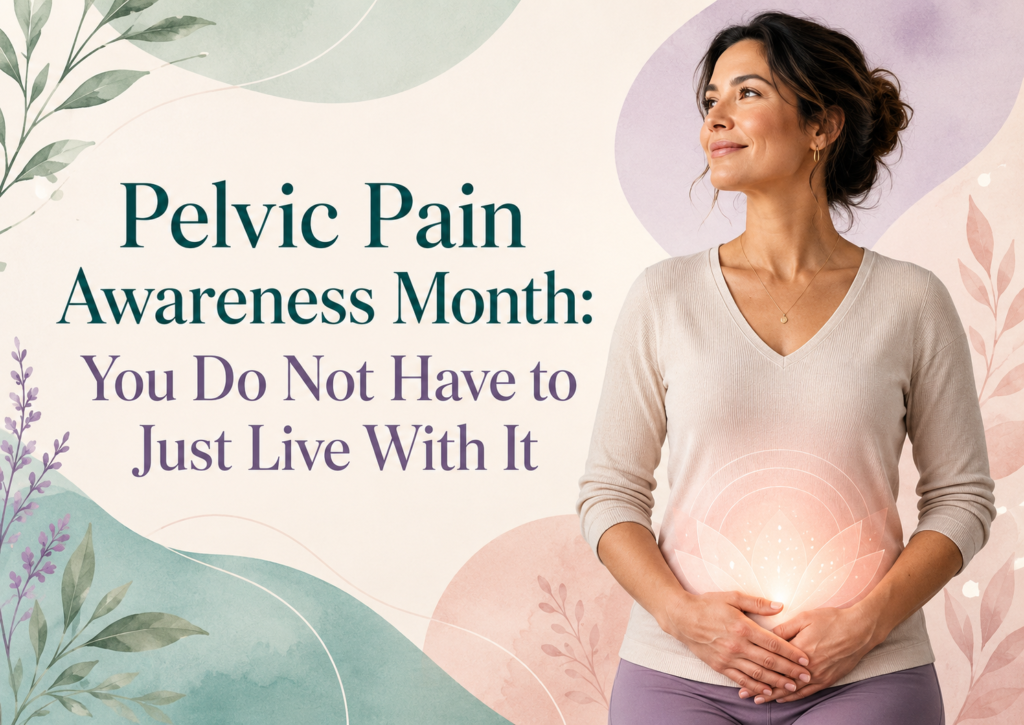
May is Pelvic Pain Awareness Month, a good time to talk openly about symptoms that many people keep quiet about. Pelvic pain is common, treatable, and worth addressing with compassionate care.
Each May, Pelvic Pain Awareness Month brings attention to a topic that is often misunderstood, minimized, or hidden behind embarrassment. Pelvic pain can affect women, men, and people of all ages. It can show up as pain with sitting, discomfort during intimacy, bladder or bowel urgency, pain with urination or bowel movements, low back or hip pain, or a deep ache or pressure in the pelvis.
For many people, pelvic pain is not one single symptom with one single cause. It can involve muscles, nerves, joints, digestion, bladder habits, reproductive health, stress, past injuries, surgery, pregnancy, childbirth, or patterns of tension that have developed over time. That can feel frustrating, but it also means there are many ways to help the body move toward comfort and function again.
At Restorative Solutions, we believe pelvic pain should not be treated as something you are expected to tolerate. Pain that changes how you sit, sleep, work, exercise, go to the bathroom, care for your family, or enjoy intimacy deserves attention.
What Is Pelvic Pain?
Pelvic pain is pain felt in the lower abdomen, pelvis, genitals, tailbone, hips, or surrounding areas. It may be sharp, dull, burning, cramping, heavy, or pressure-like. It may come and go, or it may feel constant. Some people notice pain during certain activities, such as:
- Sitting for long periods
- Walking, bending, lifting, or exercising
- Urinating or having a bowel movement
- Sexual activity
- Menstrual cycles
- Stressful seasons of life
- Recovery after birth, surgery, or injury
Chronic pelvic pain is often described as pain that lasts six months or longer. But you do not have to wait six months to ask for help. If pelvic pain is affecting your daily life, it is worth discussing with a healthcare professional.
Why Pelvic Pain Is Often Overlooked
Pelvic symptoms can be hard to talk about. Many people have been told that discomfort is “normal,” especially after childbirth, around menstruation, during menopause, after prostate concerns, or as part of aging. Others worry that their symptoms are too personal or too confusing to explain.
Pelvic pain can also be overlooked because it may not always appear clearly on a test or scan. That does not mean the pain is not real. Muscles, nerves, connective tissue, breathing patterns, posture, stress responses, bladder habits, bowel routines, and movement patterns can all contribute to symptoms in ways that may not show up on imaging.
This is where a whole-person approach matters.
How Occupational Therapy Can Help
Occupational therapy focuses on helping people return to the daily activities they need and want to do. For pelvic health, that might include using the bathroom without fear, sitting comfortably through work or travel, enjoying intimacy without pain, exercising safely, sleeping better, caring for children, returning to hobbies, or feeling more confident in the body again.
Pelvic health occupational therapy may include:
- Education about the pelvic floor and how it works with the hips, core, breath, and nervous system
- Pelvic floor muscle training, which may include strengthening, relaxation, coordination, or all three
- Bladder and bowel retraining strategies
- Gentle movement and mobility work
- Manual therapy techniques when appropriate
- Biofeedback to help improve awareness and control
- Lifestyle changes that support symptom reduction
- Strategies for pacing, positioning, stress regulation, and daily routines
One important note: pelvic floor therapy is not just “doing Kegels.” Some people need strengthening, but others need help relaxing overactive or guarded muscles. Many need coordination more than force. The right plan depends on the person, their symptoms, and their goals.
Signs It May Be Time to Seek Help
Consider reaching out if you notice:
- Pelvic pain that interferes with work, sleep, exercise, intimacy, or family life
- Pain with urination, bowel movements, or sexual activity
- Urinary urgency, frequency, leakage, or trouble fully emptying the bladder
- Constipation, straining, or bowel urgency
- Tailbone, hip, low back, or abdominal pain that keeps returning
- Symptoms after pregnancy, childbirth, surgery, prostate treatment, or injury
- Feeling anxious about leaving the house because of bladder, bowel, or pain symptoms
You do not need to have the “worst” symptoms to deserve care. Early support can help prevent problems from becoming more limiting.
A More Hopeful Way to Think About Pelvic Pain
Pelvic Pain Awareness Month is not only about naming the problem. It is about reminding people that help exists.
Pelvic pain can make life feel smaller. You may stop exercising, avoid travel, decline social plans, limit intimacy, or plan your day around symptoms. A good therapy plan works in the opposite direction: it helps you understand what is happening, build confidence, and gradually return to the activities that matter to you.
Healing is not always instant, and it is rarely one-size-fits-all. But with skilled support, many people can reduce pain, improve bladder and bowel function, move more freely, and feel more at home in their bodies.
Restorative Solutions Can Help
Restorative Solutions provides compassionate pelvic health therapy for people experiencing pelvic pain, bladder or bowel concerns, painful intercourse, constipation, low back or hip pain, and other related symptoms. Our approach is private, respectful, and centered on your goals.
If pelvic pain has been limiting your life, May is a meaningful time to take the next step. You do not have to figure it out alone.
Sources
- International Pelvic Pain Society: May is Pelvic Pain Awareness Month
- ACOG: Chronic Pelvic Pain
- Mayo Clinic: Chronic Pelvic Pain – Symptoms and Causes
- Mayo Clinic: Pelvic Pain Causes